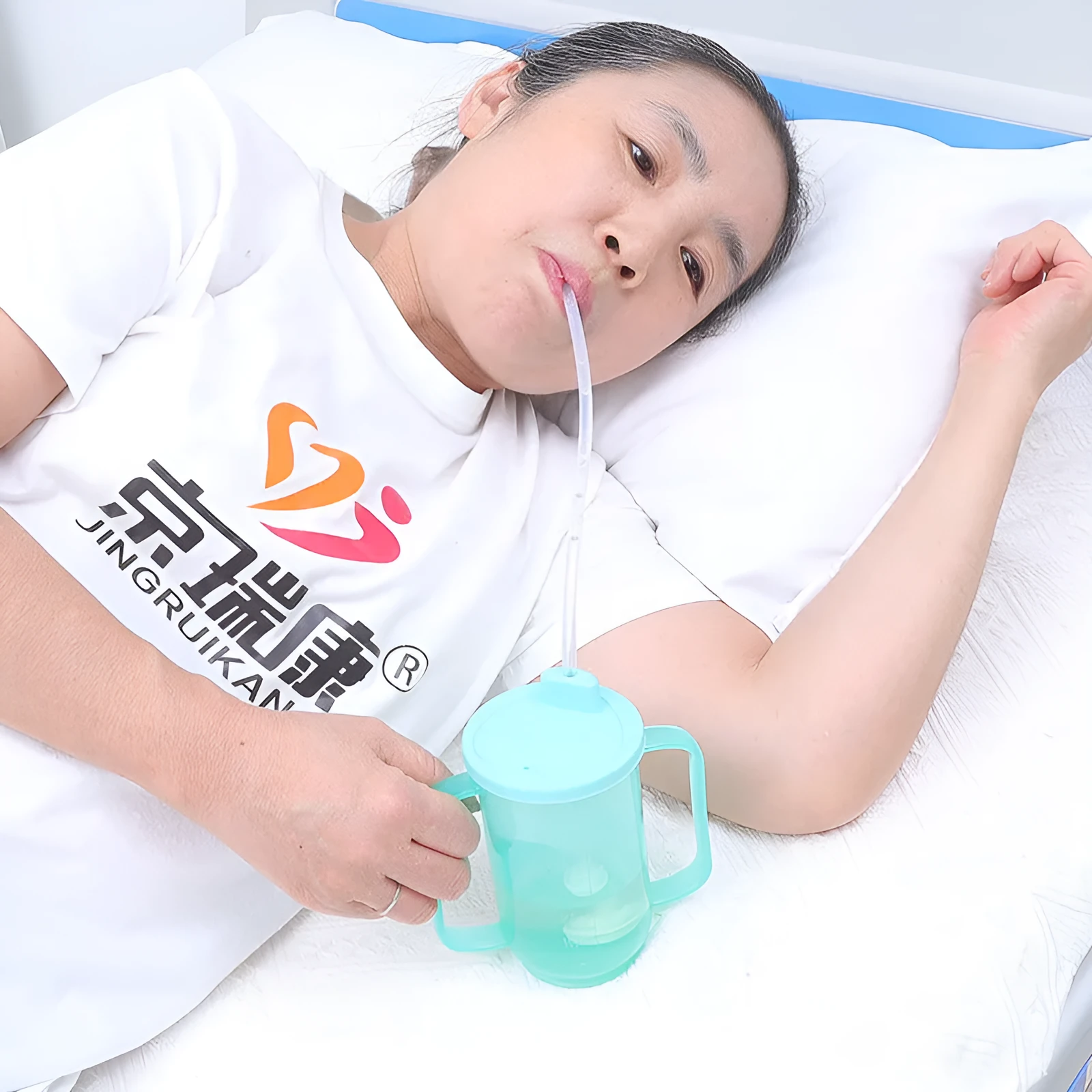
Bedside drinking cup with anti-choke design for elderly and pregnant women, featuring oblique spout construction with optional wrist splint attachment, made from PP material in simple packaging with handle and lid for convenient bedside hydration.


Bedside drinking cup with anti-choke design for elderly and pregnant women, featuring oblique spout construction with optional wrist splint attachment, made from PP material in simple packaging with handle and lid for convenient bedside hydration.
Bedside drinking cup with anti-choke oblique spout design for elderly and pregnant women hydration needs
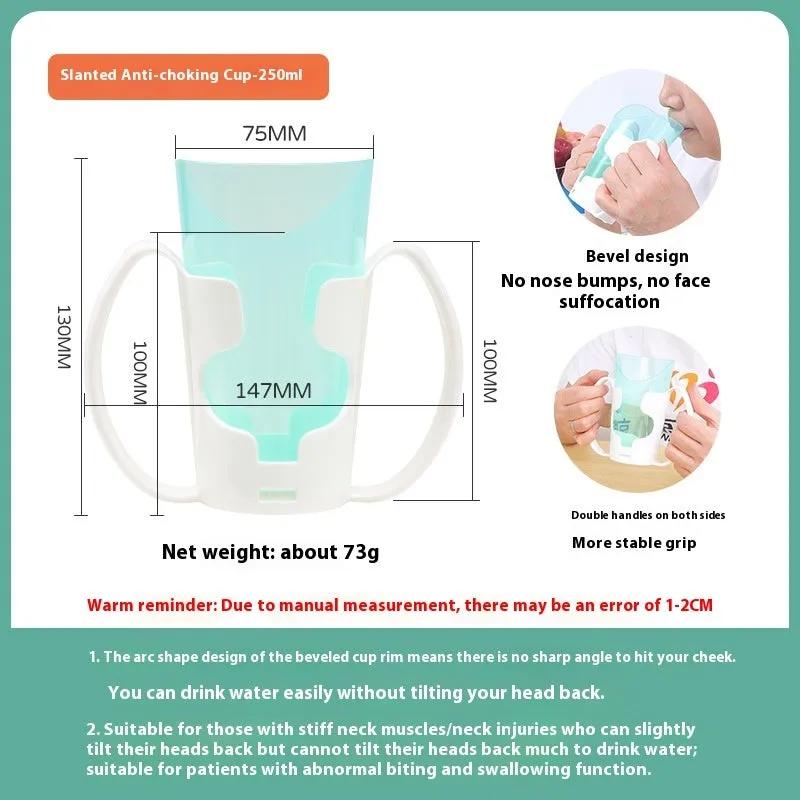
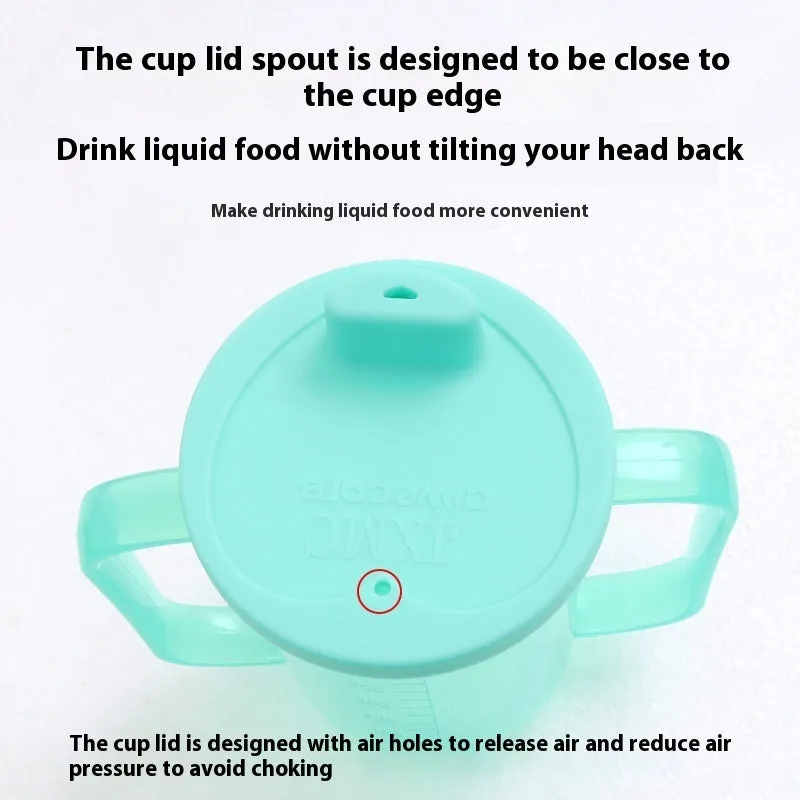
This specialised drinking cup addresses a common challenge faced by individuals who spend extended periods in bed: maintaining hydration safely and conveniently. For elderly people with swallowing difficulties, pregnant women experiencing mobility restrictions, or anyone recovering from medical procedures, accessing liquids from a lying position presents both practical and safety concerns. The oblique spout construction works to control liquid flow, reducing the risk of choking that can occur with traditional drinking vessels. By providing multiple configuration options including versions with and without wrist splints, this product adapts to varying levels of hand mobility and user preference, offering a practical hydration solution directly at the bedside.
Features and Construction

The cup's design prioritises both safety and accessibility through several key construction elements. Each component serves a specific practical purpose in addressing the challenges of bedside drinking, from the angled spout that directs liquid flow to the handle that facilitates grip from various positions.
Material and Build
Constructed from PP (polypropylene), this cup uses a food-safe plastic material known for its durability and lightweight properties. Polypropylene offers practical advantages for bedside use including resistance to staining from various liquids, easy cleaning without specialised care requirements, and sufficient rigidity to maintain its shape during handling. The material choice supports repeated washing cycles, making it suitable for regular use in care environments or home settings. The inclusion of both lid and handle creates a complete drinking vessel system rather than just a cup, with the lid helping to prevent spills during transport or when not in use.
Size and Practical Fit
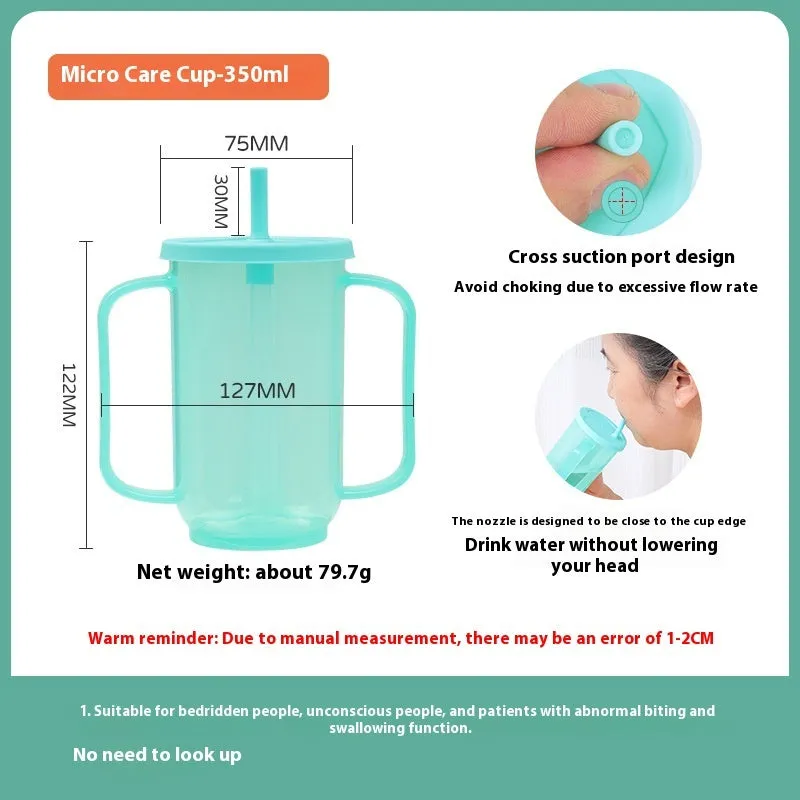
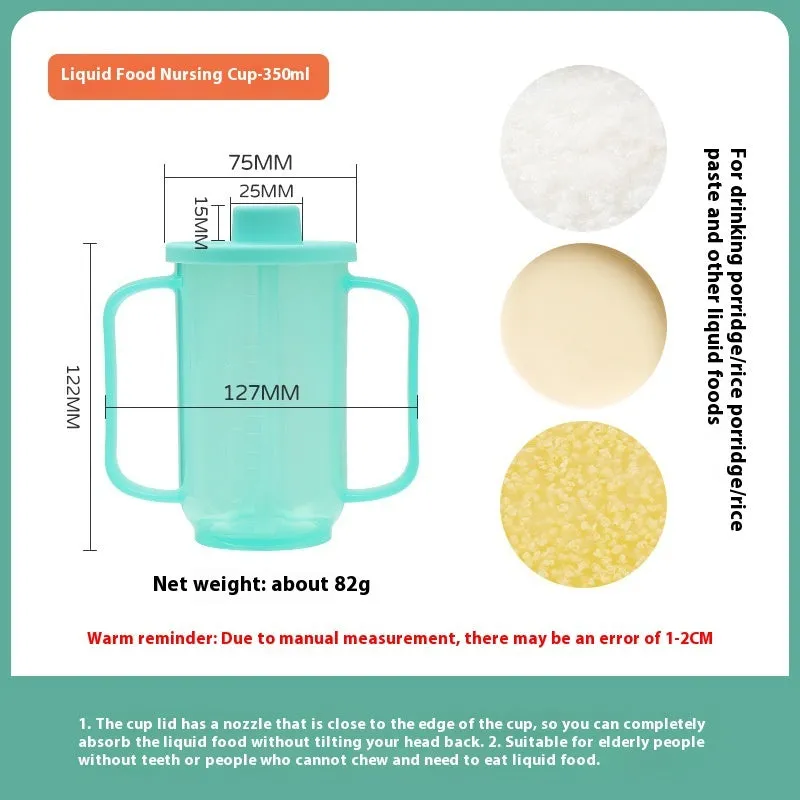
The cup comes in multiple capacity configurations to suit different hydration requirements, with exact measurements shown in the product images. This variation allows users to select based on their specific needs, whether requiring smaller, more frequent sips or larger volume capacity for extended periods between refills. The optional wrist splint attachment represents a key differentiator, providing additional hand support for users with limited grip strength or joint mobility issues. The simple packaging approach focuses resources on the product itself rather than elaborate presentation, keeping the essential drinking vessel accessible and straightforward to implement immediately.
Uses and Placement
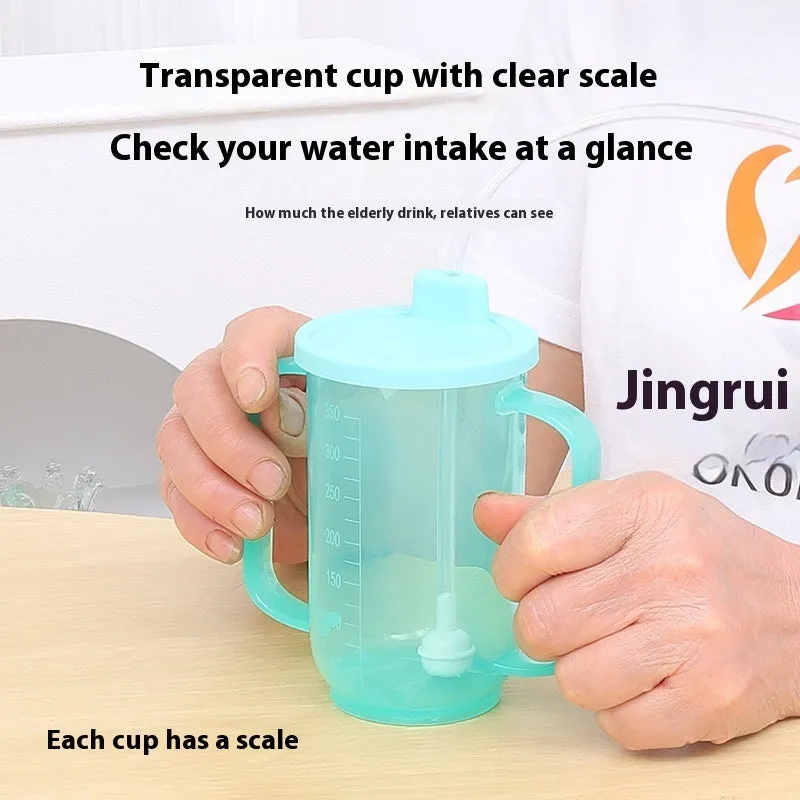
This drinking cup serves specific hydration scenarios where traditional vessels prove impractical or potentially unsafe. Its design considerations extend beyond basic liquid containment to address the physical and positional challenges of drinking from lying or reclined positions.
Event or Professional Use
In professional care environments including hospitals, nursing homes, and rehabilitation centres, this cup provides a practical solution for patient hydration management. Caregivers can place the cup within easy reach of bedridden individuals, reducing the frequency of assistance required for drinking while maintaining safety through the anti-choke design. The multiple configuration options allow matching specific models to patient needs, whether that involves wrist support for those with arthritis or Parkinson's disease, or specialised spouts for individuals with swallowing disorders. The durable PP construction withstands repeated sanitisation cycles common in institutional settings.
Everyday Home Use
For home care situations, this cup offers independent hydration support for elderly family members, pregnant women experiencing restricted mobility, or individuals recovering from surgery. The bedside placement eliminates the need to sit fully upright or call for assistance each time a drink is needed, promoting both comfort and dignity. Family caregivers appreciate the reduced choking risk when they cannot be constantly present to supervise drinking. The simple design integrates naturally into bedroom environments without appearing overtly medical, supporting normalisation of necessary assistive devices within domestic settings.
Benefits and Buying Value

The practical advantages of this drinking cup extend beyond immediate hydration to encompass safety improvements, reduced caregiver burden, and enhanced user independence. Each design element contributes to addressing specific challenges associated with bedside drinking scenarios.
Reuse and Low Maintenance
The PP material construction supports repeated use with standard cleaning methods, requiring no specialised care instructions beyond basic washing. This durability represents practical value for both individual users and institutional purchasers, as the cup withstands regular use without degradation of function or appearance. The simple component design with minimal moving parts reduces points of potential failure, supporting longevity through straightforward construction. Unlike disposable alternatives, this reusable cup generates less waste while providing consistent performance across multiple uses.
Why Choose This Product
This drinking cup addresses a specific gap in hydration solutions: safe liquid consumption from reclined positions. While many cups claim general ease of use, the oblique spout design specifically targets choking prevention through controlled liquid flow. The optional wrist splint differentiates it from generic bedside cups by accommodating users with grip limitations. The multiple configuration options allow matching the product to individual needs rather than requiring adaptation to a one-size-fits-all solution. For those seeking practical hydration assistance without complex medical apparatus, this cup provides targeted functionality through considered design elements.