
Silicon Labs EFR32MG21 Zigbee USB dongle for Home Assistant, a pre-flashed Zigbee coordinator with +20dBm output gain and PCB antenna, supporting ZHA and Zigbee2MQTT, housed in a plastic shell and featuring OTA update via UART with 115200 baud rate.


Silicon Labs EFR32MG21 Zigbee USB dongle for Home Assistant, a pre-flashed Zigbee coordinator with +20dBm output gain and PCB antenna, supporting ZHA and Zigbee2MQTT, housed in a plastic shell and featuring OTA update via UART with 115200 baud rate.
Silicon Labs EFR32MG21 Zigbee USB Dongle: A Pre-Flashed Coordinator for Home Assistant
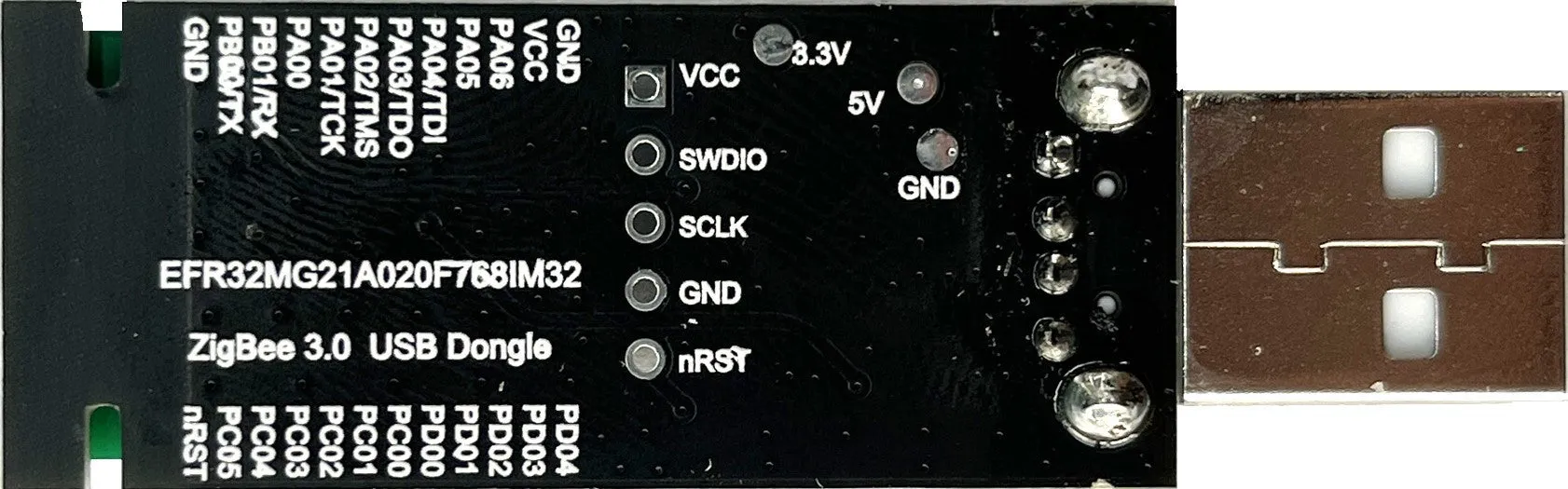
This USB dongle serves as a dedicated Zigbee coordinator, designed to create or extend a local smart home network. It eliminates dependence on proprietary manufacturer hubs by providing a standardised, user-controlled gateway. Pre-configured with the EZSP v8 protocol, it is ready for use with popular open-source platforms like Home Assistant's ZHA component or Zigbee2MQTT. The device is built around Silicon Labs' EFR32MG21 wireless SoC, a chipset known in the maker community for Zigbee applications, paired with a CH340E for USB connectivity. Its primary function is to act as the central communication link for all Zigbee end-devices in your network, from sensors and switches to bulbs and locks.
Features and Construction

The dongle's functionality is defined by its specific hardware and pre-loaded software, offering a practical entry point into local Zigbee networks.
Material and Build
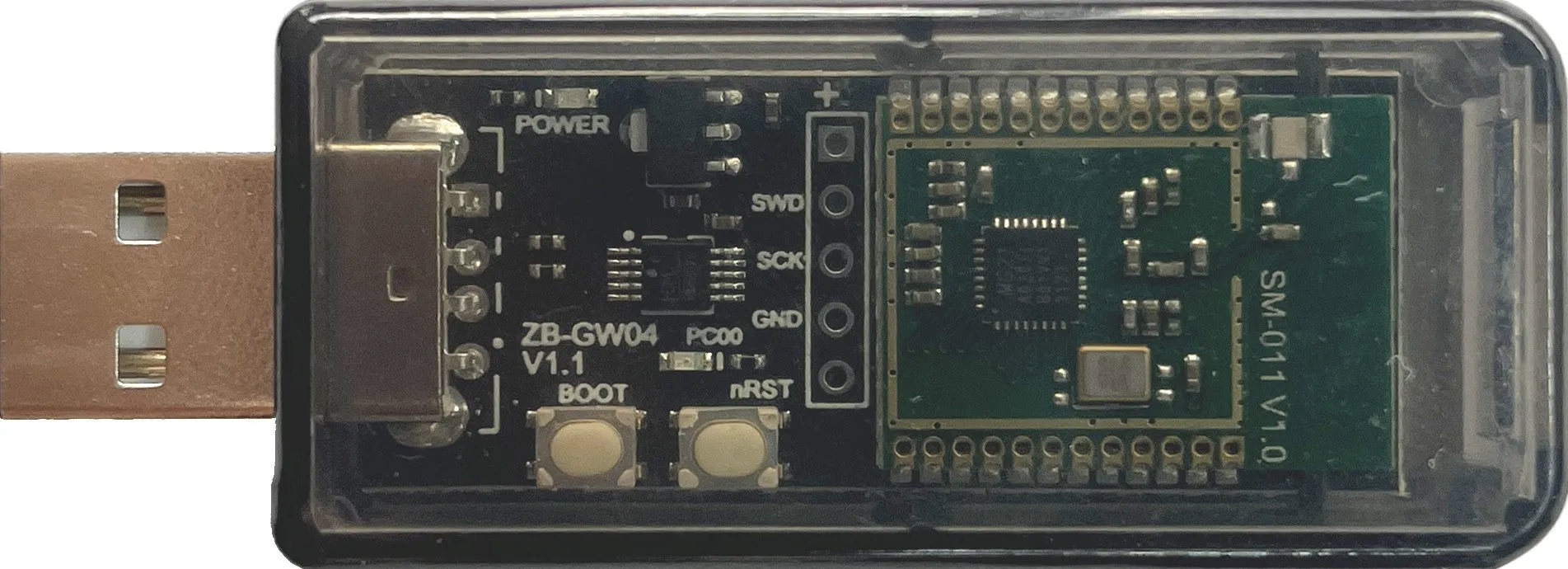
The electronic components are housed within a standard plastic shell, providing basic physical protection. The core of the device is the EFR32MG21 microcontroller from Silicon Labs, which handles the Zigbee protocol stack and radio functions. This is coupled with a CH340E chip, which manages the USB-to-serial communication between the dongle and your computer or single-board computer. This combination is a common design for DIY and community-focused Zigbee coordinators.
Size and Practical Fit
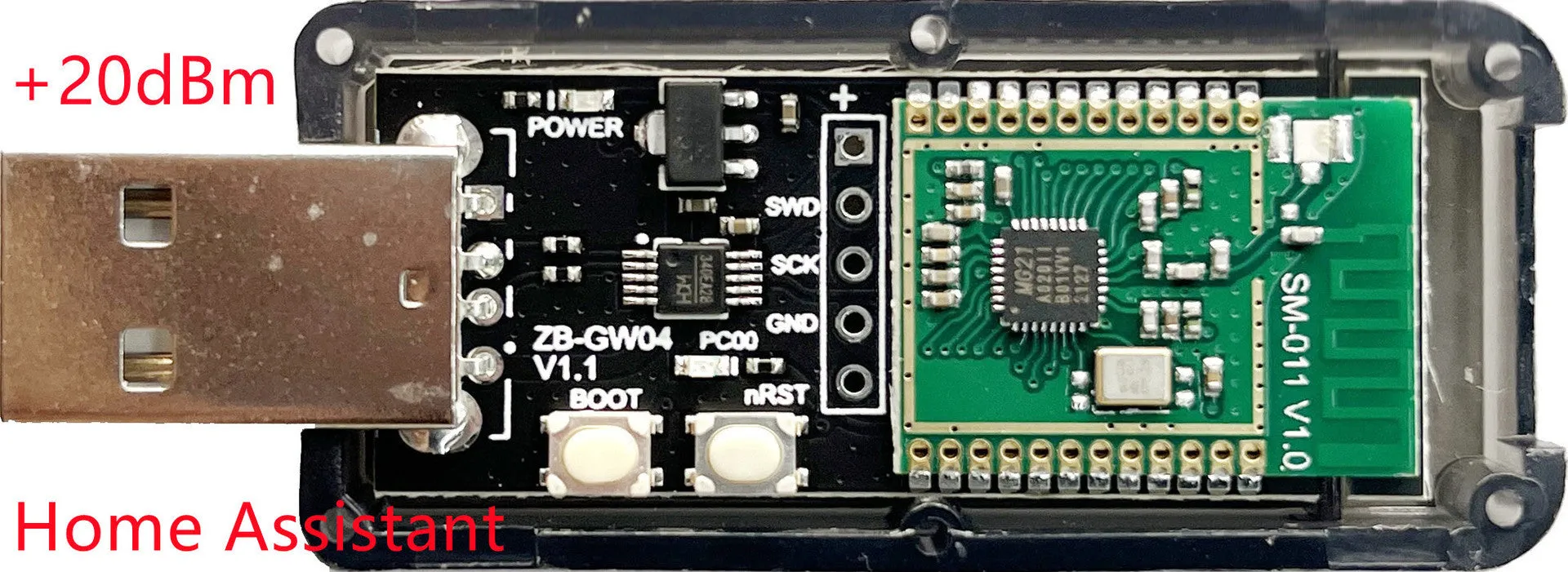
As a USB dongle, it is designed for a compact form factor suitable for direct connection to a USB port on a home server, Raspberry Pi, or similar device. The use of a PCB antenna, integrated onto the circuit board, means there are no external wires or bulky antennas, contributing to a neat installation. The +20dBm output gain specification indicates a wireless transmission power that can help provide reliable coverage throughout a typical home, supporting the connection of devices across multiple rooms.
Uses and Placement
This device is specifically tailored for users who want to build a self-hosted, vendor-agnostic smart home system, placing control and data locally.
Event or Professional Use
For developers, makers, or advanced users, the dongle's support for OTA updates via UART provides a pathway for firmware development and testing. The requirement to use a specific button sequence (BOOT and nRST) to enter update mode is a common feature for this class of device. Its adherence to Zigbee standards also suggests potential for integration into custom IoT solutions or prototypes where a standardised, programmable Zigbee gateway is needed.
Everyday Home Use
For the home enthusiast, it simplifies creating a robust Zigbee network. Once plugged in and configured in software like Home Assistant, it can pair with and control hundreds of different Zigbee devices from various brands, unifying them under one system. This setup is ideal for users seeking to avoid cloud dependencies, increase system responsiveness, and ensure their smart home functions even without an internet connection. The plastic housing is sufficient for stationary use on a desk or mounted near a home automation server.
Benefits and Buying Value
The value of this dongle lies in its pre-configured state and focus on integration with popular, open-source automation platforms.
Reuse and Low Maintenance
The device is not a disposable item; it is a core component of a smart home system designed for long-term use. The ability to update its firmware over-the-air via UART means it can receive compatibility improvements and security updates as they become available from the community or Silicon Labs, extending its useful life. Its simple construction—primarily a circuit board in a shell—means there are few moving parts to wear out.
Why Choose This Product
You would choose this specific dongle if you require a ready-to-use Zigbee coordinator that is already flashed with a stable EZSP version and is known to work with ZHA and Zigbee2MQTT. The confirmed +20dBm output gain is a concrete specification that differentiates it from lower-power alternatives, potentially offering better network range. It provides a straightforward solution, saving you the steps of sourcing individual components and flashing firmware yourself, which can be a barrier for users new to Zigbee networking.